Top 3 Insights I Learned at the 3rd Chief AI Officer Summit in Washington, D.C.

Top 3 Insights I Learned at the 3rd Chief AI Officer Summit in Washington, D.C.

Last week, I had the privilege of attending the 3rd Chief AI Officer Summit in Washington, D.C., where AI thought leaders and innovators gathered to discuss the future of artificial intelligence. The conversations were insightful, and I walked away with three major takeaways that resonated deeply with me. These insights address some of the most pressing challenges and exciting opportunities facing AI today—particularly around trust, workforce empowerment, and the evolving role of AI in real-time decision-making.

Read More

Navigating Tradeoffs in LEED v5 Requirements for General Contractors

Navigating Tradeoffs in LEED v5 Requirements for General Contractors

The construction industry plays a critical role in shaping the built environment. However, it also has a significant impact on the environment. According to a 2020 study by McKinsey & Company, approximately 26 percent of all GHG emissions and 37 percent of combustion-related emissions come from the construction and operation of the built environment. And, according to a 2021 report from the World Business Council for Sustainable Development, the construction industry is responsible for 38% (14 gigatons) of all energy-related greenhouse gas emissions each year.

So, as the world grapples with climate change, this sector presents a tremendous opportunity for decarbonization. LEED certification plays a crucial role in promoting sustainable building practices and reducing the construction industry's environmental impact.

Read More

What Will It Take? Reflections on a 2021 Series Exploring the Future of Carbon-Free Buildings

What Will It Take? Reflections on a 2021 Series Exploring the Future of Carbon-Free Buildings

Explore key strategies for reducing embodied carbon across design, operations, development, and construction. This four-part series, hosted by Clark Construction Group in partnership with IMT’s Building Innovation Hub, features expert insights on decarbonizing the built environment by 2050. From electrification and green financing to circular construction practices and policy incentives, the series uncovers what it will take to build a carbon-free future. Watch the videos and discover actionable takeaways for architects, developers, contractors, and building operators.

Read More

New Insights on Oil & Gas Drilling Productivity in the U.S.

EIA Administrator Adam Sieminski announced the newly published Drilling Productivity Report at Columbia University this week, and the key takeaway is that fewer wells have been needed to sustain production growth levels due to mechanical, technological, and operational efficiencies by drilling companies.

Read More

NY Energy Week 2013: Event Launch

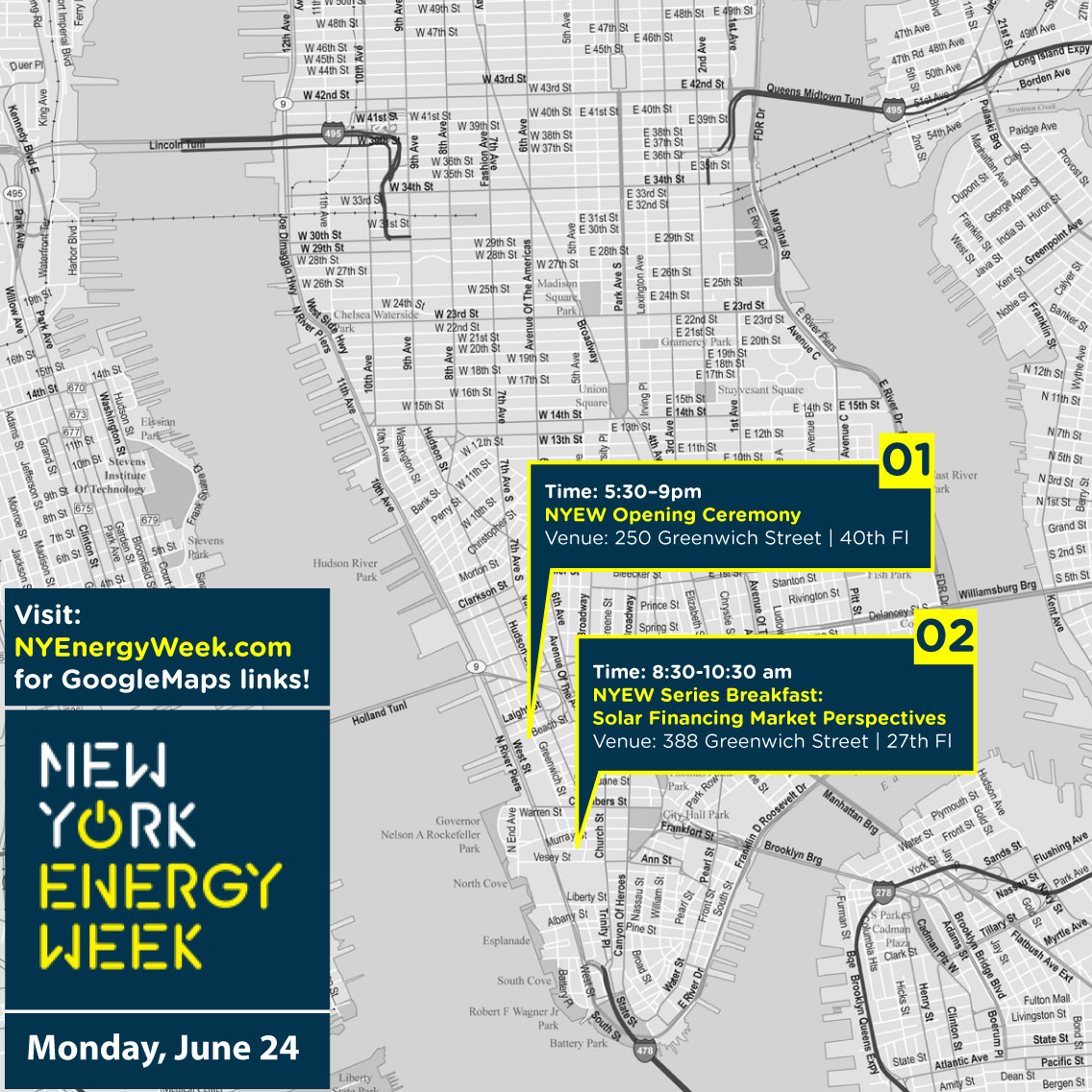
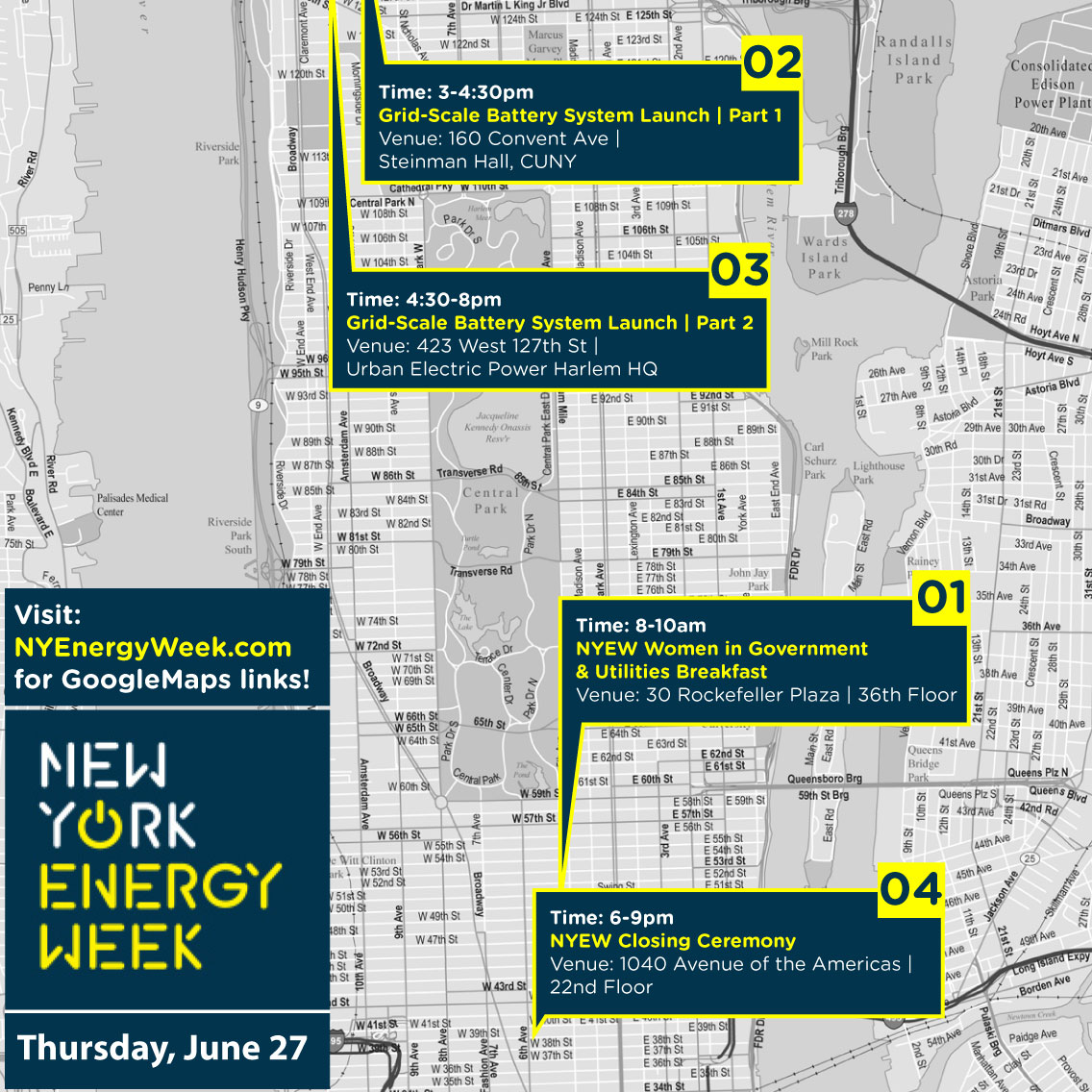
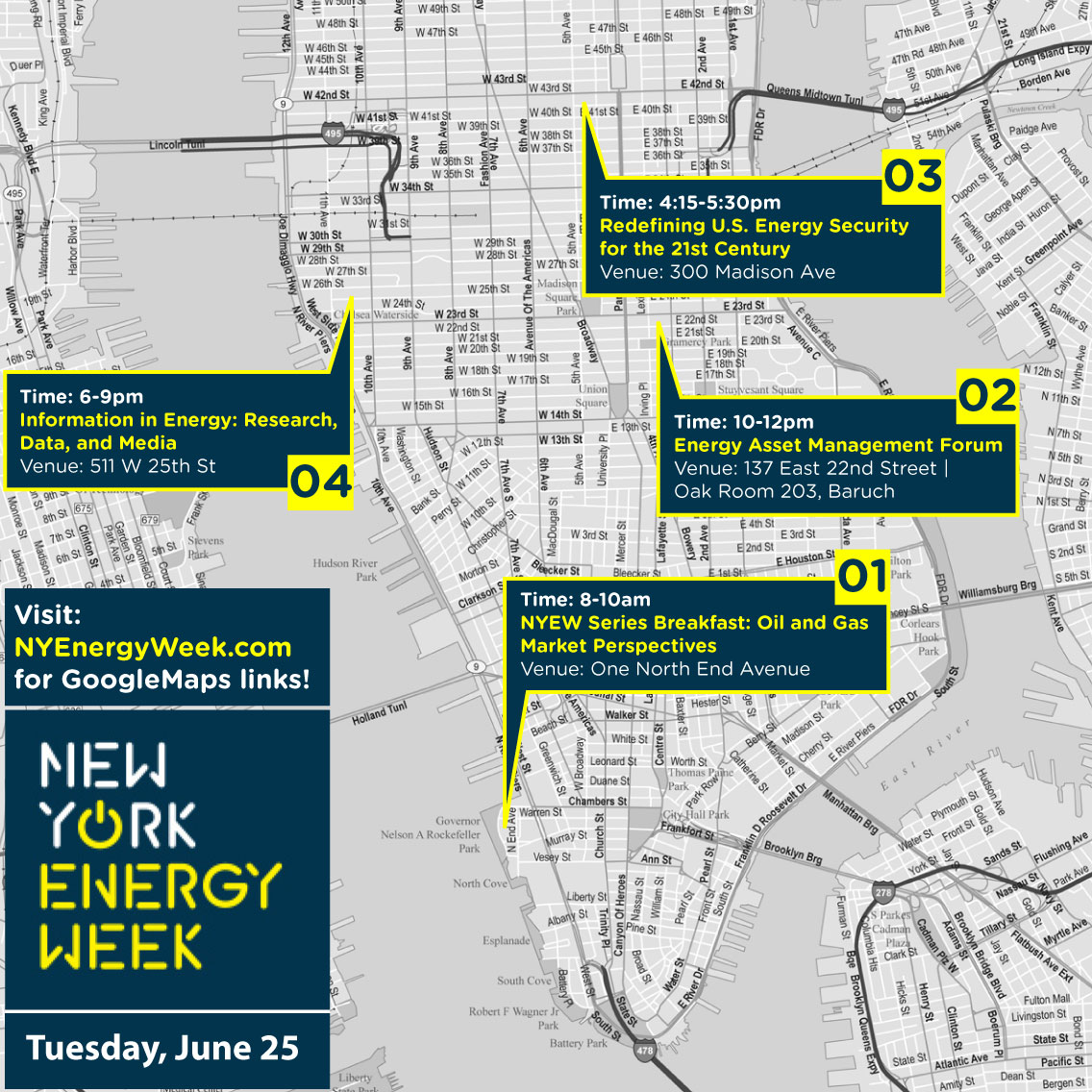
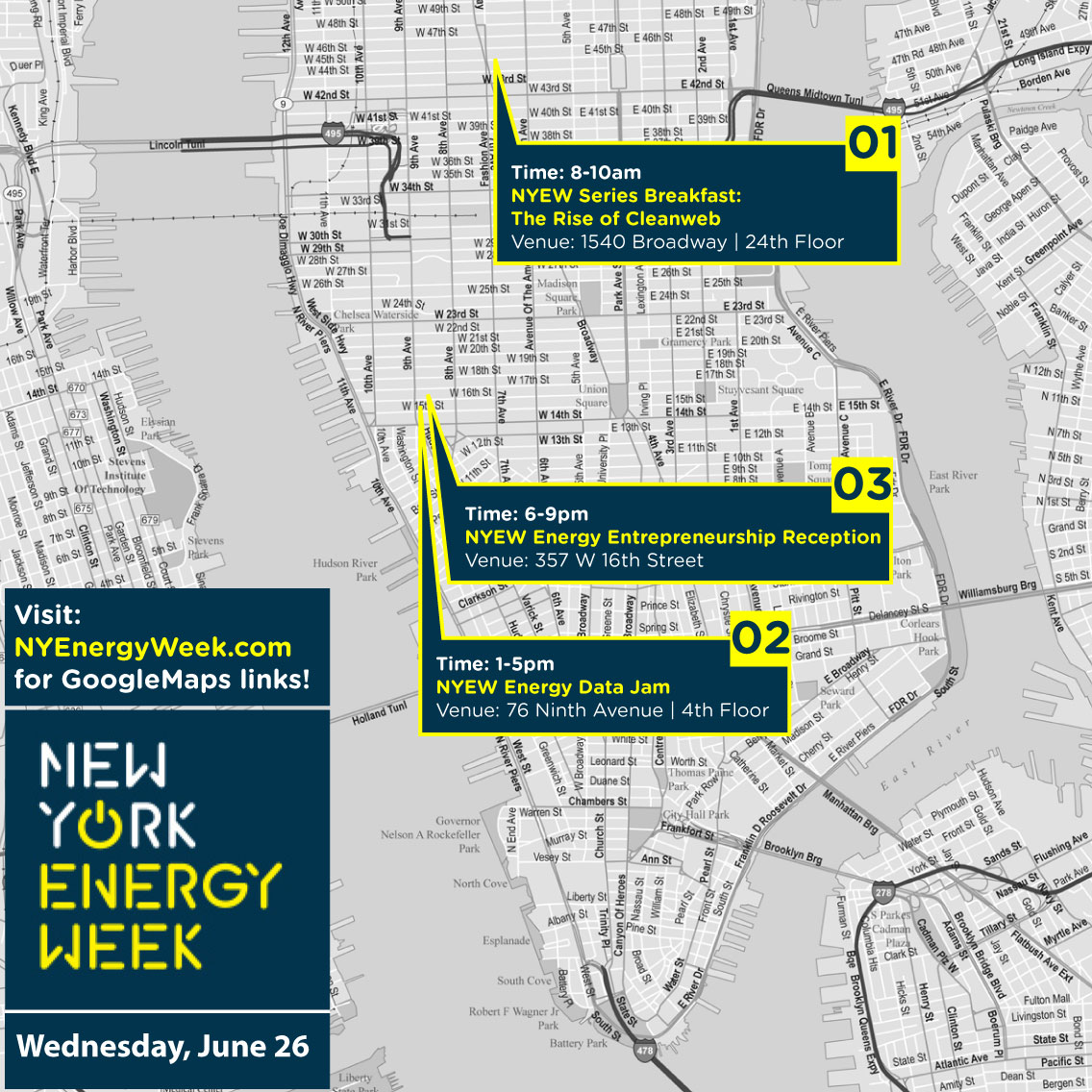
This week, New York Energy Week [NYEW] will launch its inaugural conference in various locations throughout Manhattan. I partnered with the events committee as Media Ambassador and generated these logistics tools to help attendees navigate multi-day, multi-location events.  

From the NYEW website: "New York Energy Week was founded by Energy Solutions Forum, an energy policy research and data company based in the NYC ACRE incubator, an anchor of New York’s energy startup community.

New York Energy Week is an integral part of ESF’s founding mission to support investment and collaboration among the diverse sectors of the energy industry.

As the curator of the ESF Calendar, the go-­to resource for energy business events, ESF founded the series in support of a broader vision for industry advancement by fostering cross-sector collaboration for long-term partnerships and investment. "

For more about the events, visit the @NYEnergyWeek website here

Mayor Bloomberg Presents "A Stronger, More Resilient New York "

Mayor Bloomberg Presents "A Stronger, More Resilient New York "

Mayor Michael R. Bloomberg today presented "A Stronger, More Resilient New York," the comprehensive and ambitious report that analyzes the city's climate risks and outlines recommendations to protect neighborhoods and infrastructure from future climate events.

Read More

Cogeneration - Combined Heat and Power Plant - Explained

Cogeneration plants recover the "waste heat" that is otherwise discarded from conventional power generation to produce thermal energy.

This energy is used to provide cooling or heating for industrial facilities, district energy systems, and commercial buildings. Through "waste heat recovery," cogeneration power plants achieve typical effective electric efficiencies of 70% to 90% — a dramatic improvement over the average 33% efficiency of conventional fossil-fueled power plants.