
4 Climate Week Conversations, One Challenge for Construction
/
Across four sessions at Climate Week NYC 2026 hosted by the Climate Group , I kept running into the same wall in different forms: the technology and the ambition are there, but the data, the incentives, and the shared accountability needed to act on them are still lagging behind. Concrete producers have the mix designs. Disclosers have the data. Material recovery programs have the collection streams. The harder question is how to turn those pieces into decisions that hold up under real project conditions.
Here's what I heard, where I weighed in, and what I'm taking back to construction.
Climate-Smart Concrete | Amazon Climate Pledge Hub
Many ways to reduce concrete’s carbon footprint are available today. Getting them into more projects means sharing the work of testing and adoption across producers, finishers, general contractors, and owners. Speakers also estimated a $50–100 billion annual capital gap to retrofit cement production at scale, a gap that won’t close on its own.
At Amazon's The Climate Pledge Hub, I raised a concern familiar to GCs: schedule risk can outweigh a material premium. An unfamiliar mix may call for additional strength testing or changes in handling, and when that delays a pour or follow-on work, the cost reaches well beyond the concrete itself, especially with labor as construction's most expensive line item. Better shared performance data and accessible mix-design tools could help project teams and smaller regional producers make informed decisions with more confidence. Public procurement, comprising roughly half of U.S. concrete purchases, remains one of the most underused levers to create demand at scale.
CDP Supply Chain Member Roundtable
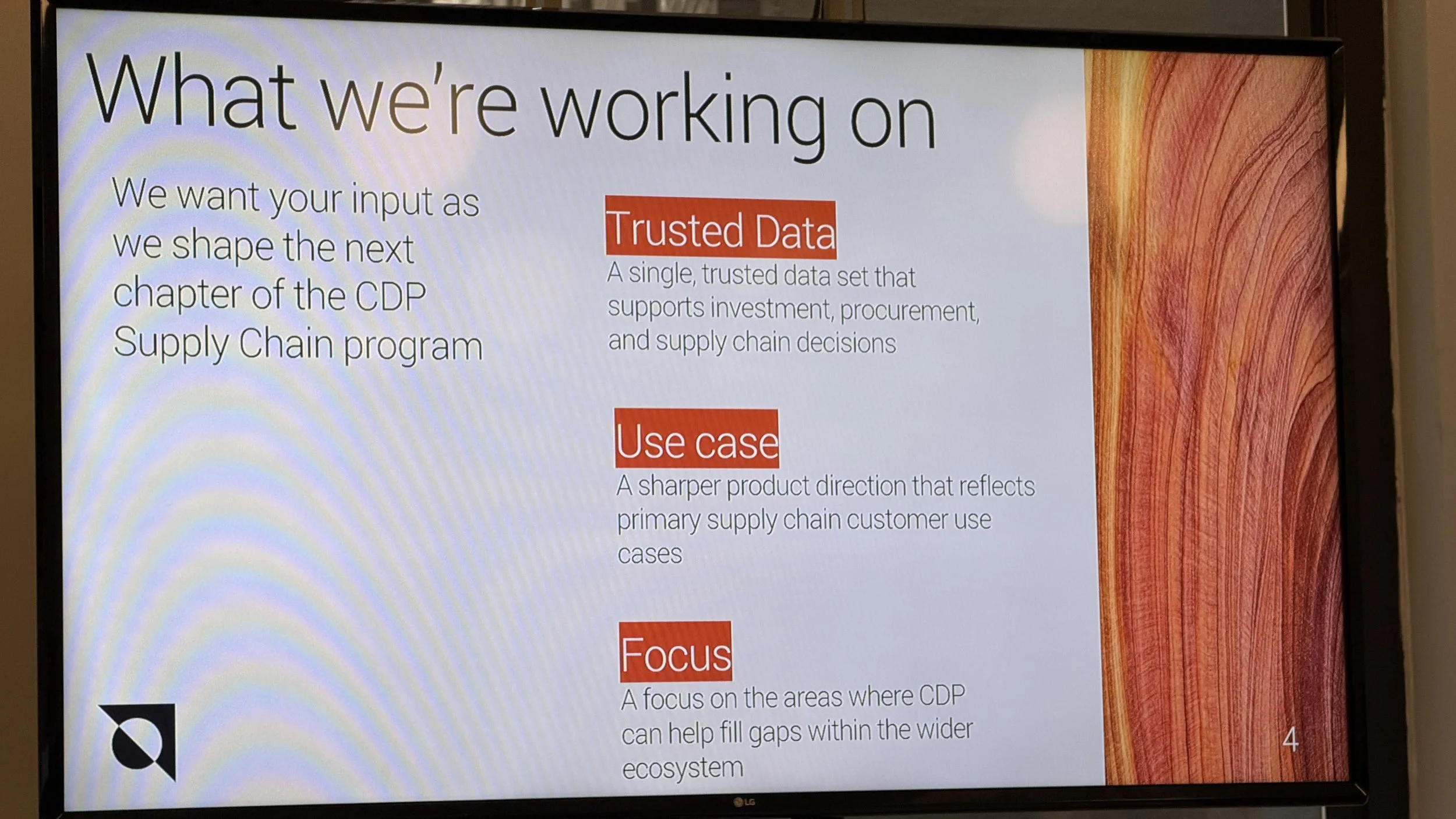
I asked what happens to disclosure data after companies submit it. Disclosers rarely see clearly how requesters use their responses, how a score affects their standing with clients, or what distinguishes the value of reaching a higher assessment tier.
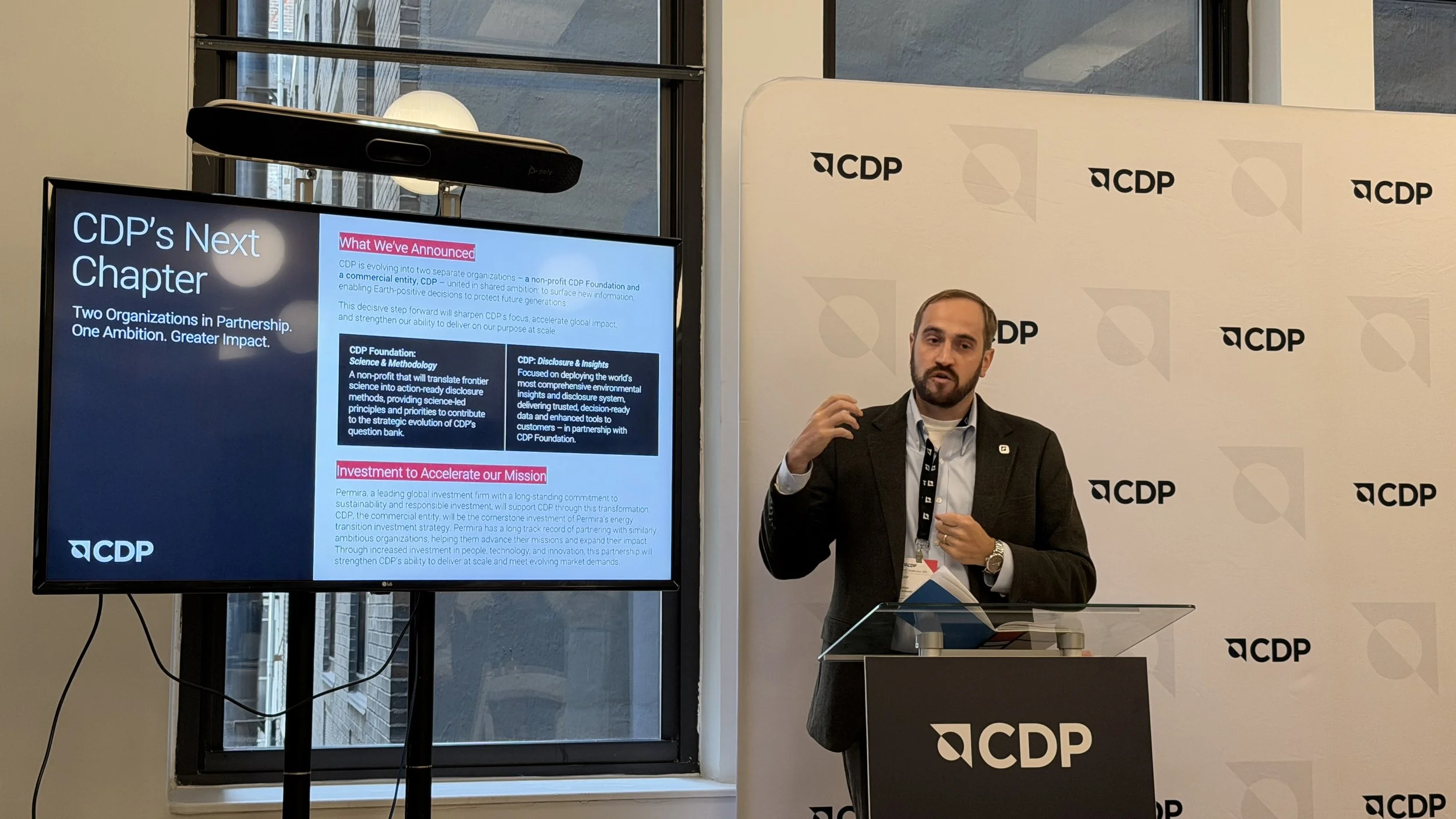
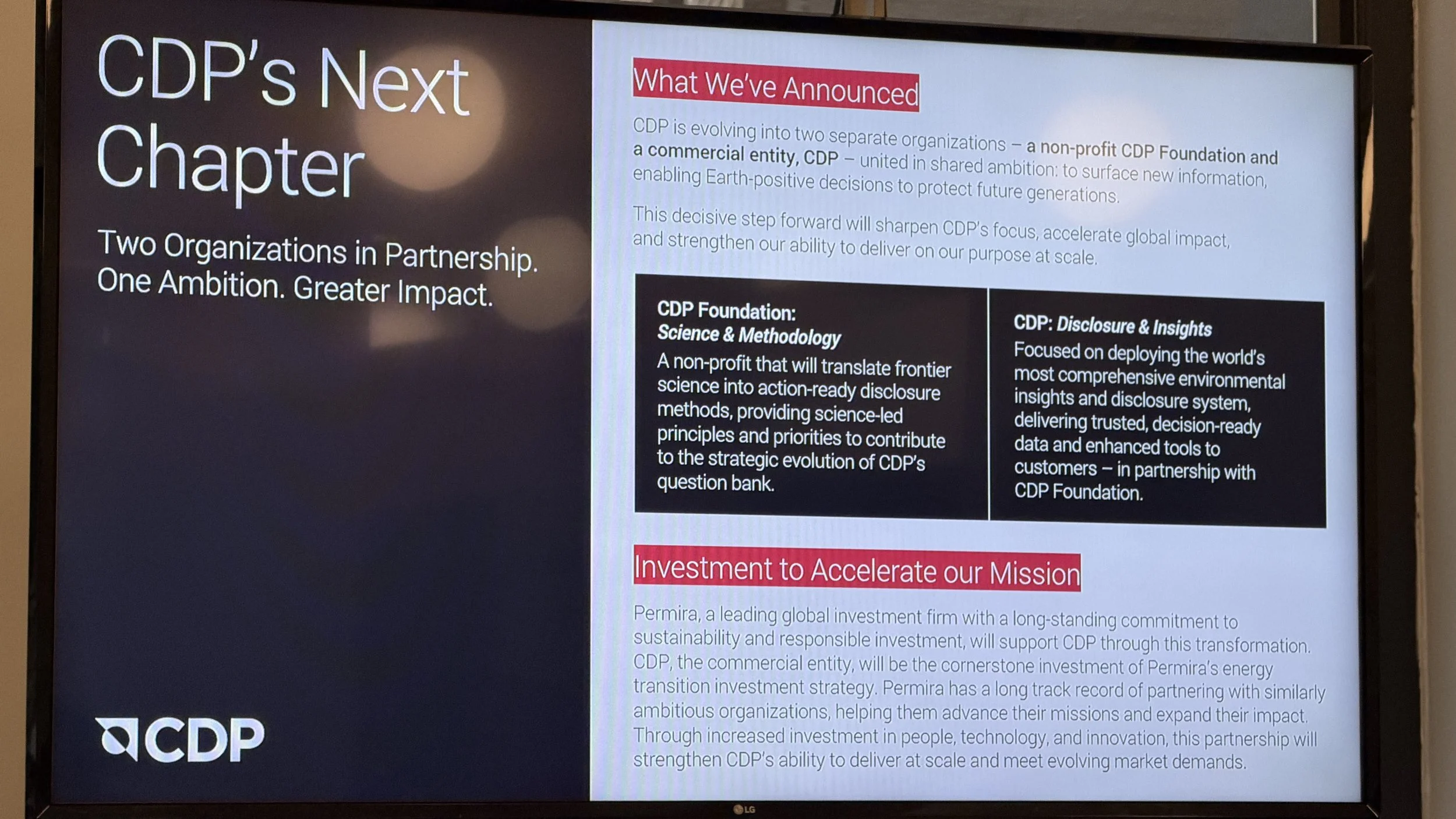
That question feels timely as CDP separates into a commercial organization backed by Permira and a nonprofit foundation focused on the science behind disclosure. I believe it's a real opportunity for the CDP community to ask how the disclosure system should help companies with the information, beyond reporting it.
I floated an idea worth developing further: a tiered scoring layer, roughly 100 to 500-level depth, that could help disclosing companies pace their effort year over year rather than treat every cycle as a fresh maximum-effort sprint. A 100-level view might simply map question completion; a 500-level might track multi-year trends. For CDP, that kind of layered analytics could also become a natural extension of its own database, a deeper product built on data it already holds. Either way, it points at the same gap: disclosure alone doesn't tell a company whether it's actually getting better at this.
Embodied Carbon & Low-Carbon Materials | Amazon Climate Pledge Hub
Warranty risk came up early as a core blocker: trade partners are understandably reluctant to stamp something they didn't install new, which points toward routing salvaged materials back through the original trade for inspection rather than treating reuse as a GC-only task. A specification habit drew real pushback too: "if feasible" or "where possible" language lets sustainable options quietly disappear from a project, while a firm requirement, negotiated at bid, tends to actually get built.
Listening to that, I offered a carpet manufacturer's reclamation experience from our own work: taking back old carpet can run into concerns about legacy materials, tenant-improvement schedules that leave little room for storage, and uncertainty about the material's eventual use.
It's also where I landed on a distinction that matters in practice and in carbon accounting: recycling and reuse are different paths. A product collected through a circularity program may become a secondary product rather than return to its original use. Calling both outcomes "closed loop" can hide the work still needed to make recovery more effective, and hearing the warranty and spec-language issues first is what sharpened that point for me.
The Scope 3 Paradox | GO2 Markets
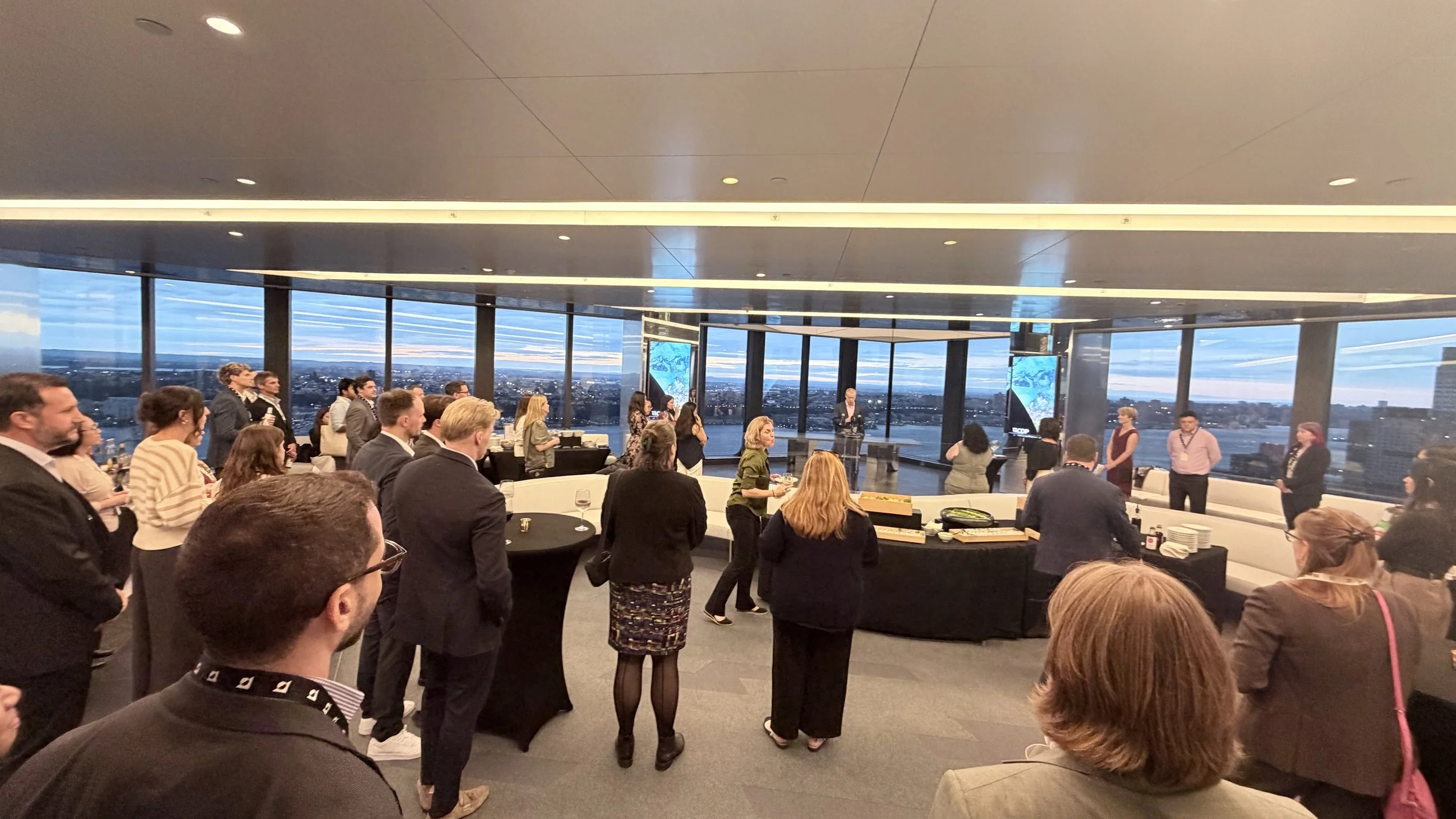
The conversation, hosted by GO2 Markets at One World Trade Center, widened beyond construction. Speakers described different approaches: Toyota North America revisiting fleet targets, Cisco moving from supplier target-setting toward reductions after reaching 88 percent of its supplier base by spend, BASF treating supplier underperformance as a conversation rather than a termination trigger, and Mastercard considering Scope 3 through a double-materiality lens.
That "by spend" qualifier from Cisco stuck with me. It's a reminder that "tier" means something different depending on how a company draws the line, by spend, by operational control, by revenue share, and without a shared reference point, the same word can mean very different commitments across two companies claiming similar progress. Anchoring tier definitions to an established framework like the Greenhouse Gas Protocol (GHG Protocol) matters for exactly that reason: it keeps tiers from becoming whatever a company's own operational or financial boundaries happen to make convenient, and gives an industry an actual basis for comparison instead of five versions of the same claim.
The approaches vary, but the challenge is shared. Companies increasingly depend on actions throughout their value chains to meet climate goals, and they need better ways to understand progress and work with partners when performance falls short.















What I'm taking back
None of what's standing in the way is going to move on its own, but each of these rooms pointed at something construction can actually do about it. We can push for firm specification language instead of "if feasible" outs, so decisions made at design don't quietly disappear by the time a project breaks ground. We can build the testing and performance data that de-risks new mixes and materials before schedule becomes the excuse to default to the familiar. We can ask sharper questions of the frameworks we report into, not to opt out of disclosure, but to make sure the effort translates into something beyond a score. And we can hold our own tier definitions, and our partners', to a standard like the GHG Protocol, so "supplier engagement" means the same thing across a value chain instead of five different things dressed up as one.
Construction has practical work to do here. It's not the whole solution, but it's the part that's actually ours to build, and I'd rather we work through the gaps in the open than wait for someone else to hand us the answer.