
What Happens When Construction Leaders Bring Jobsite Reality to Capitol Hill
/Policy works best when it is informed by the realities of how projects are actually delivered.
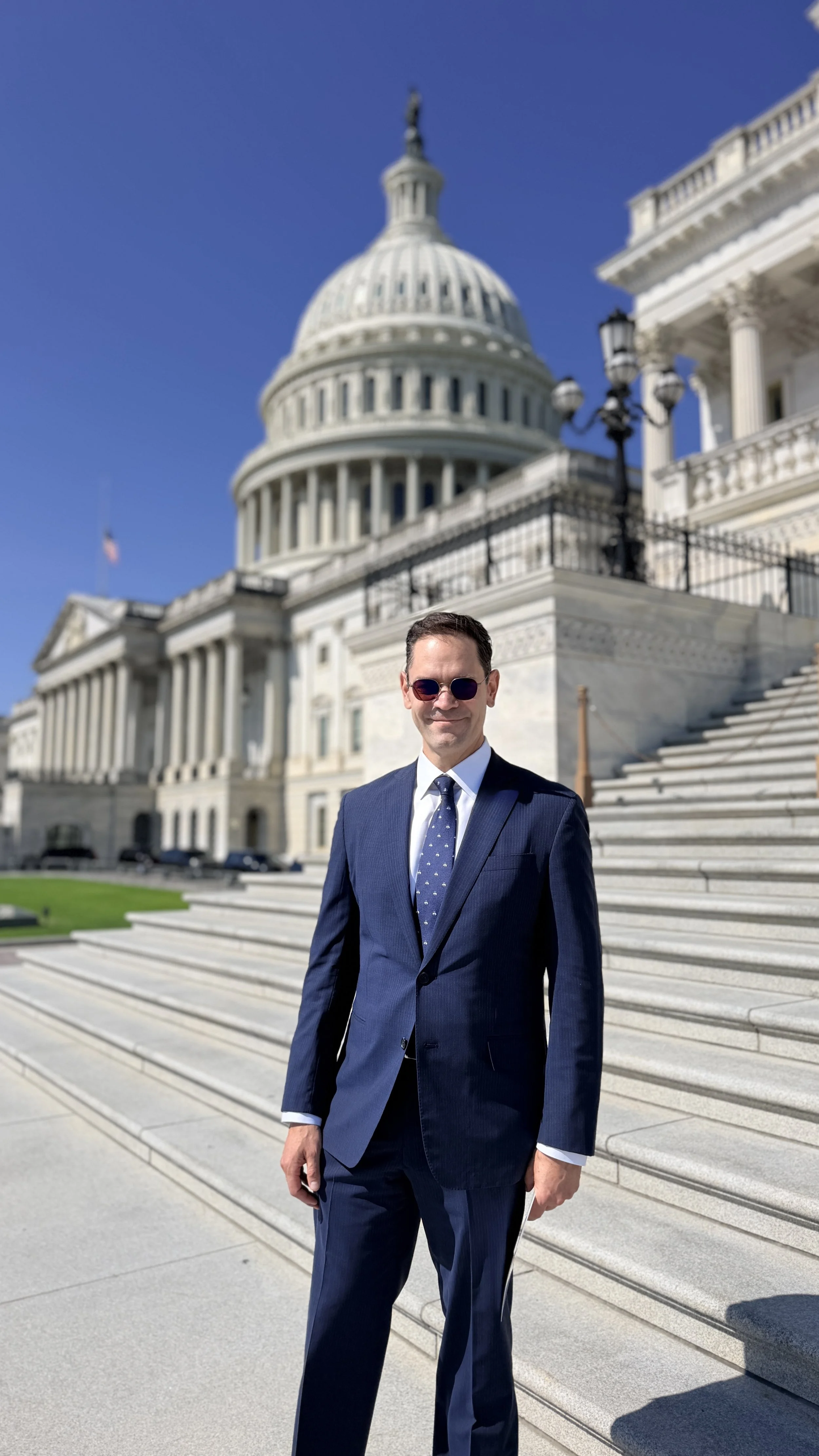
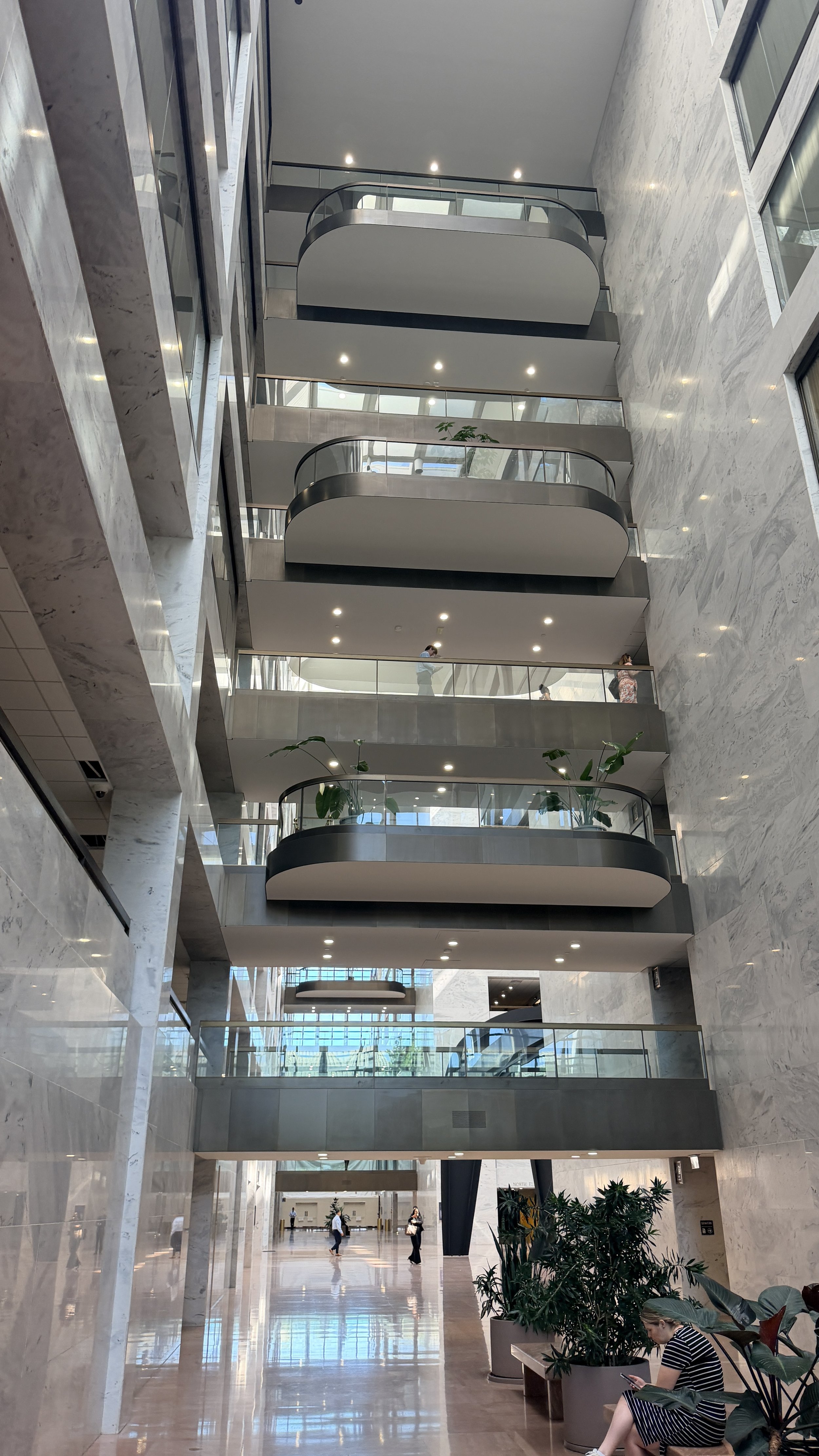
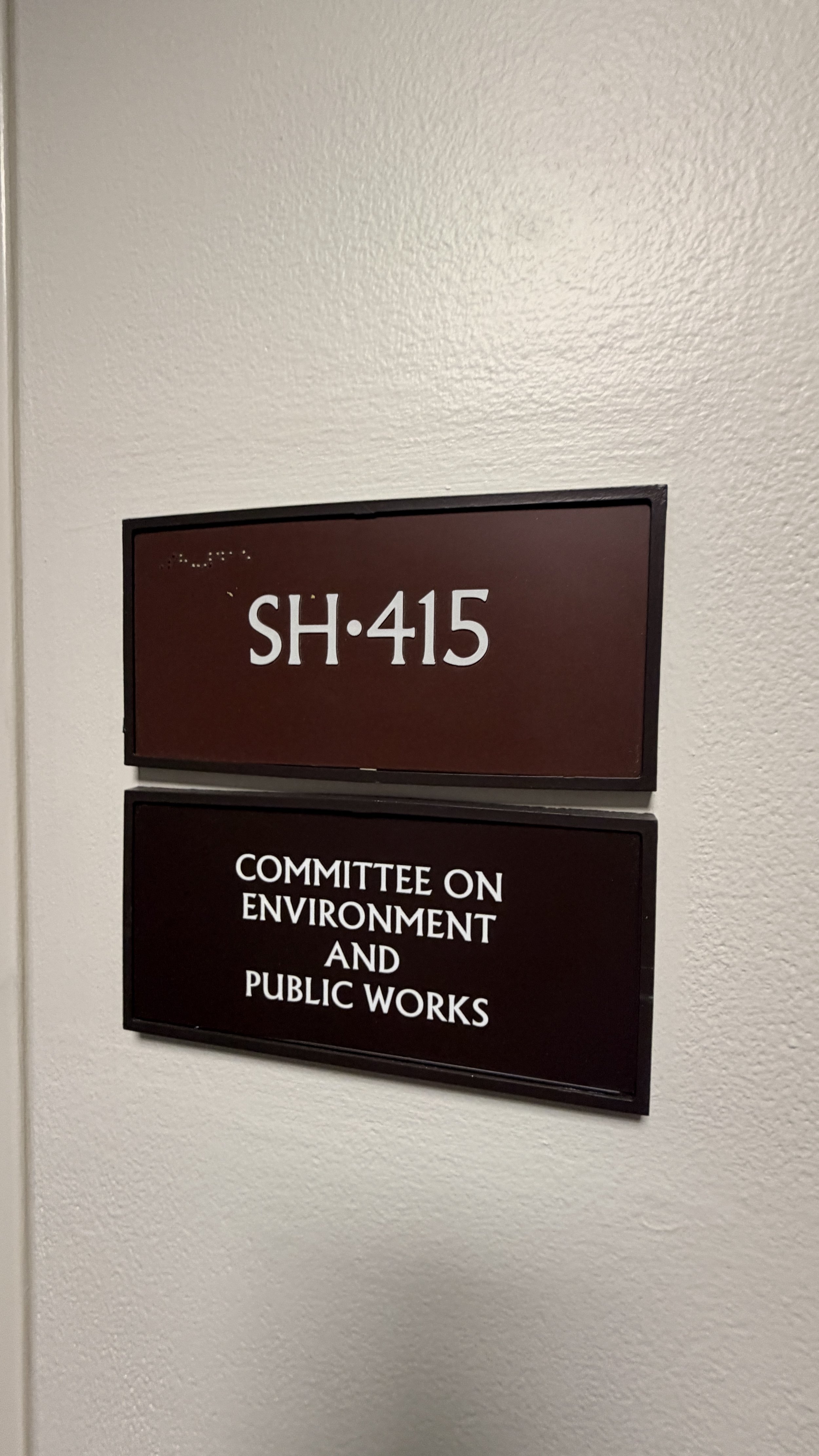
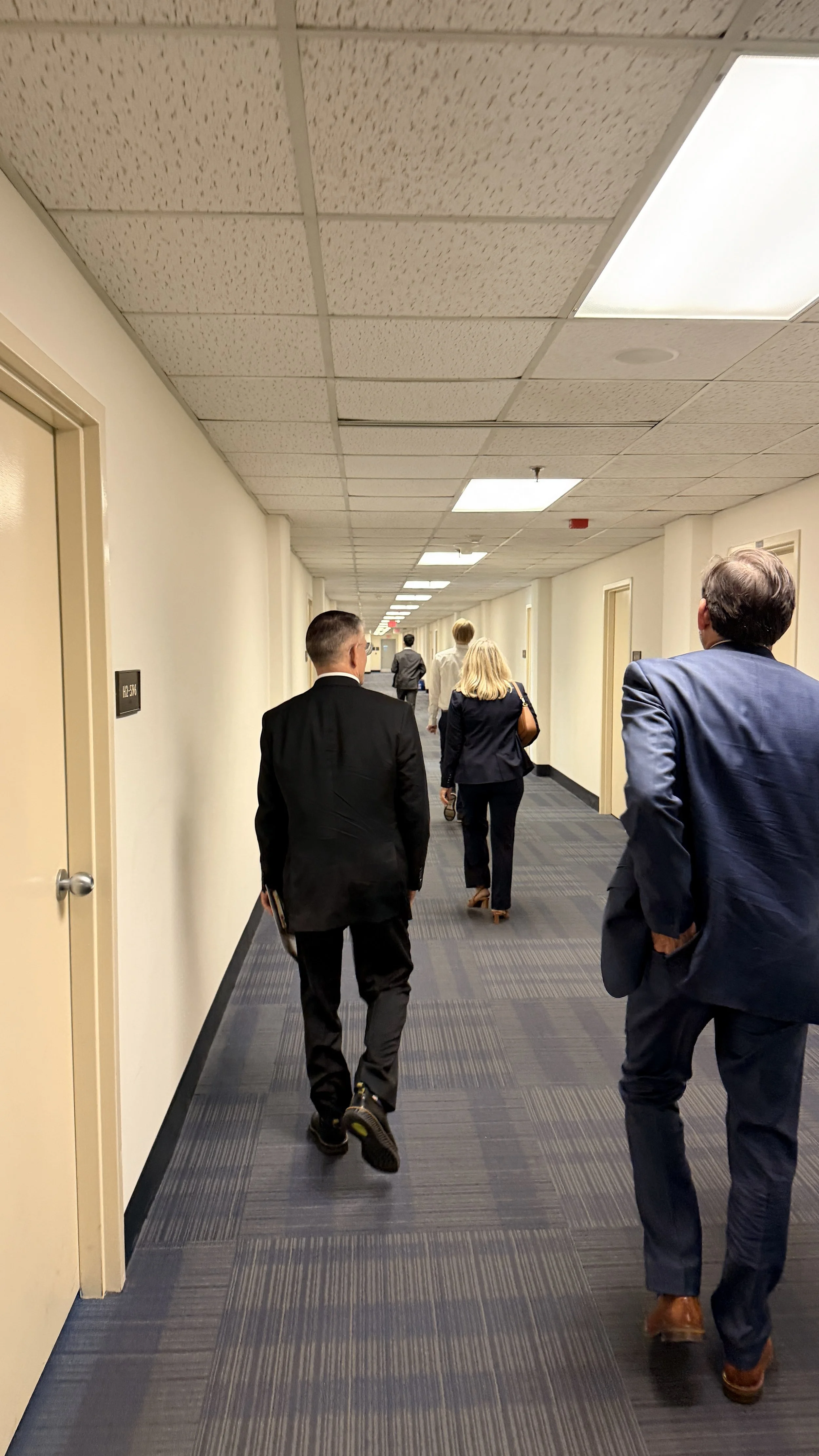
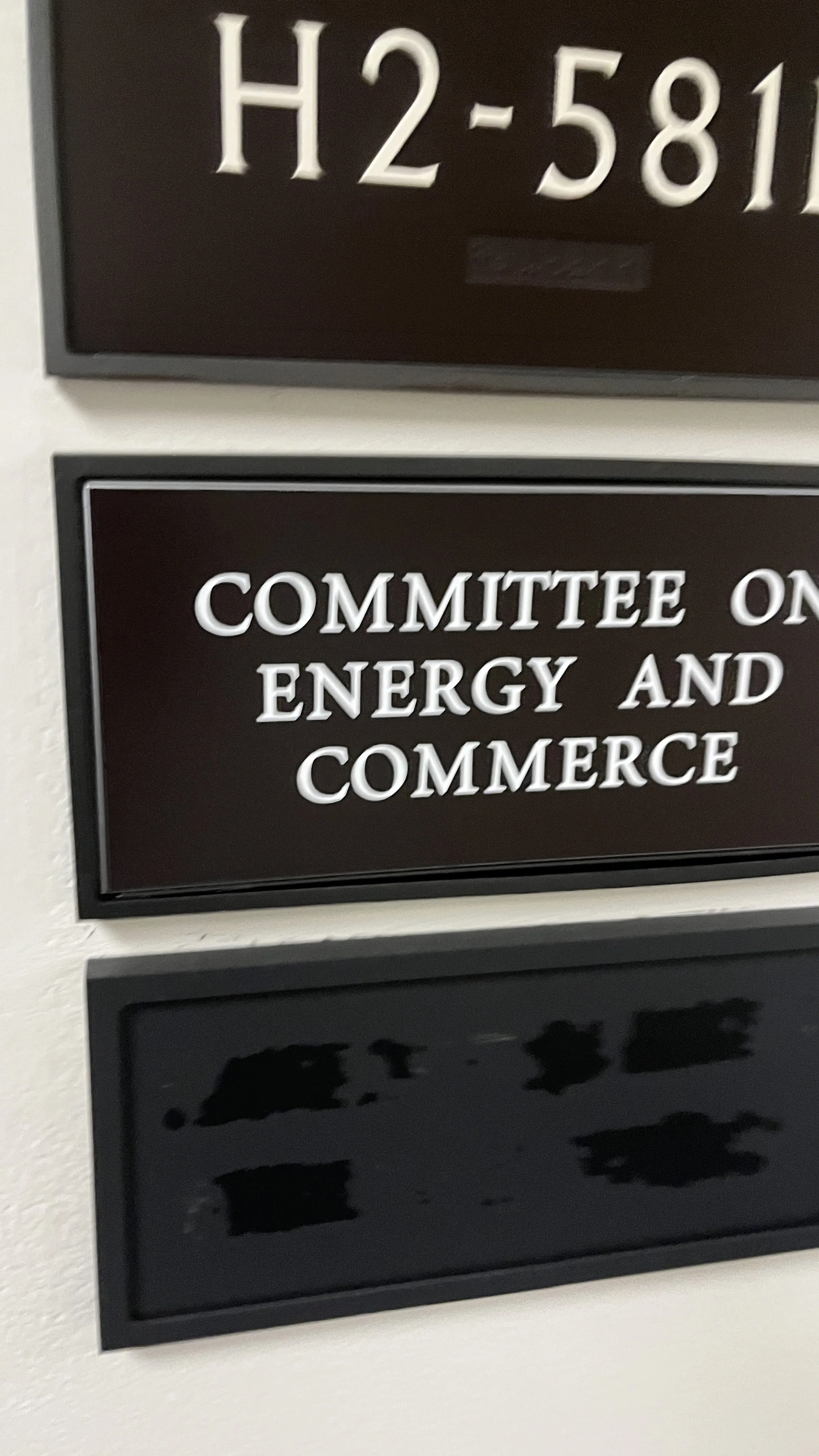
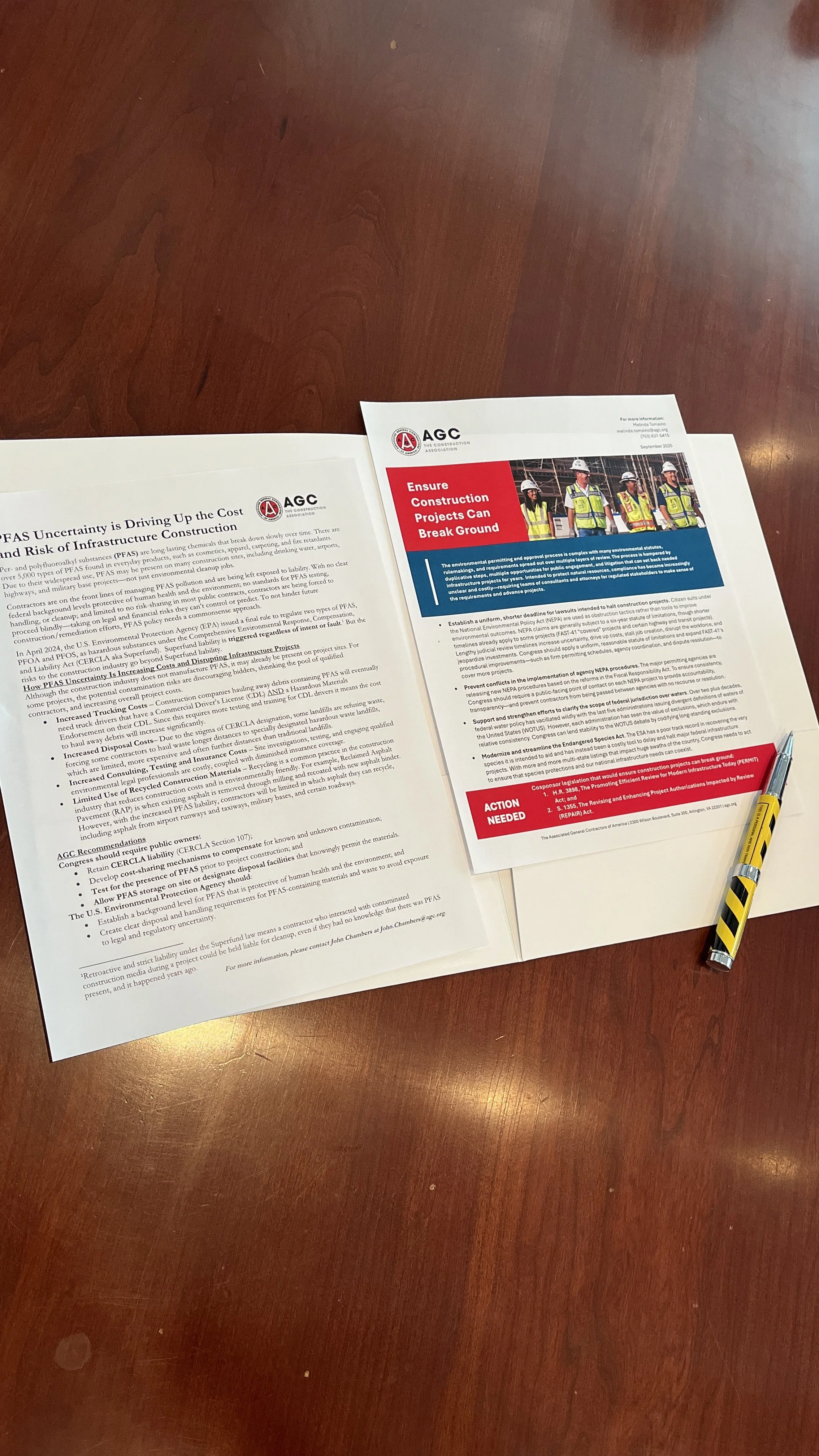
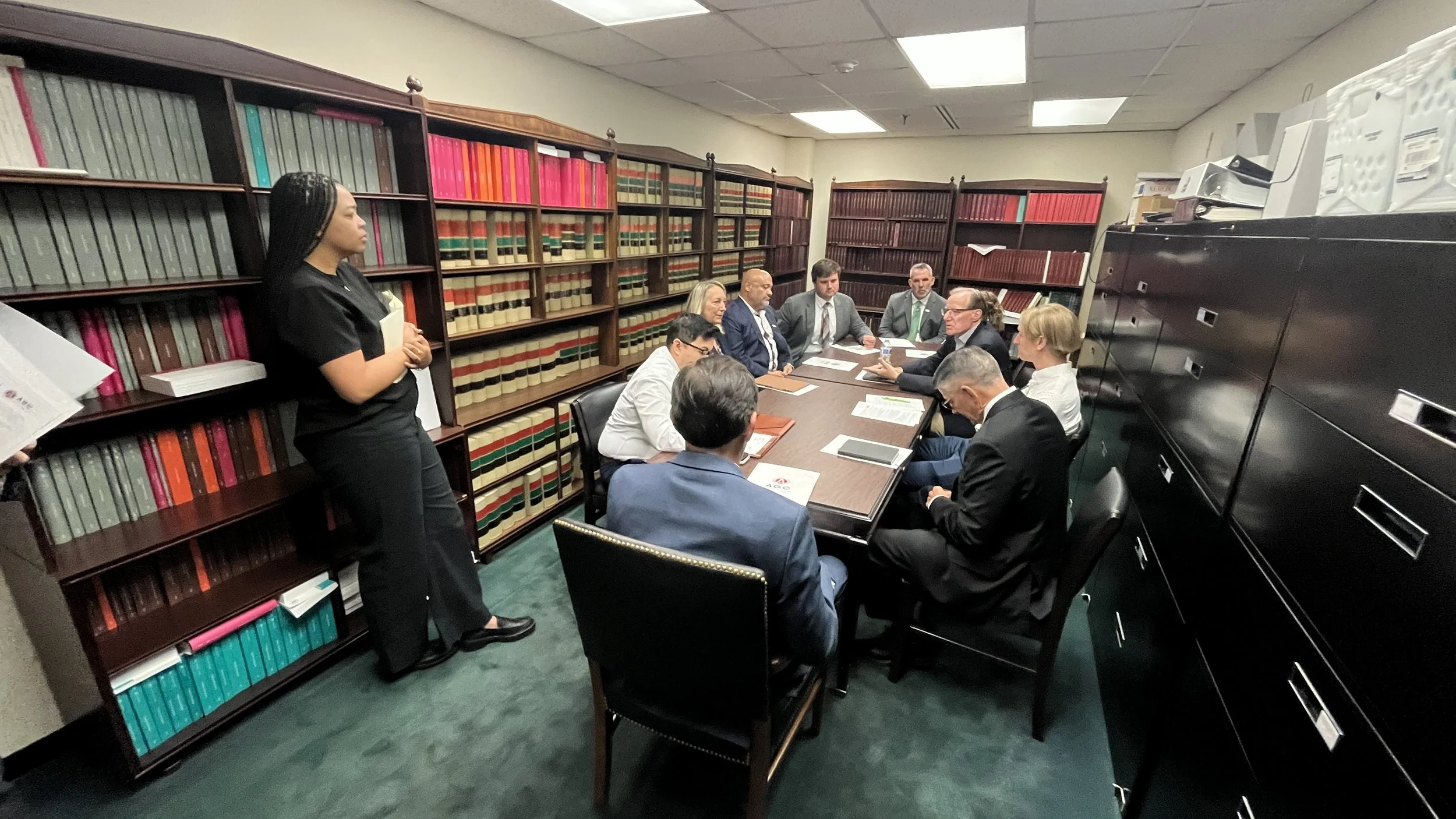
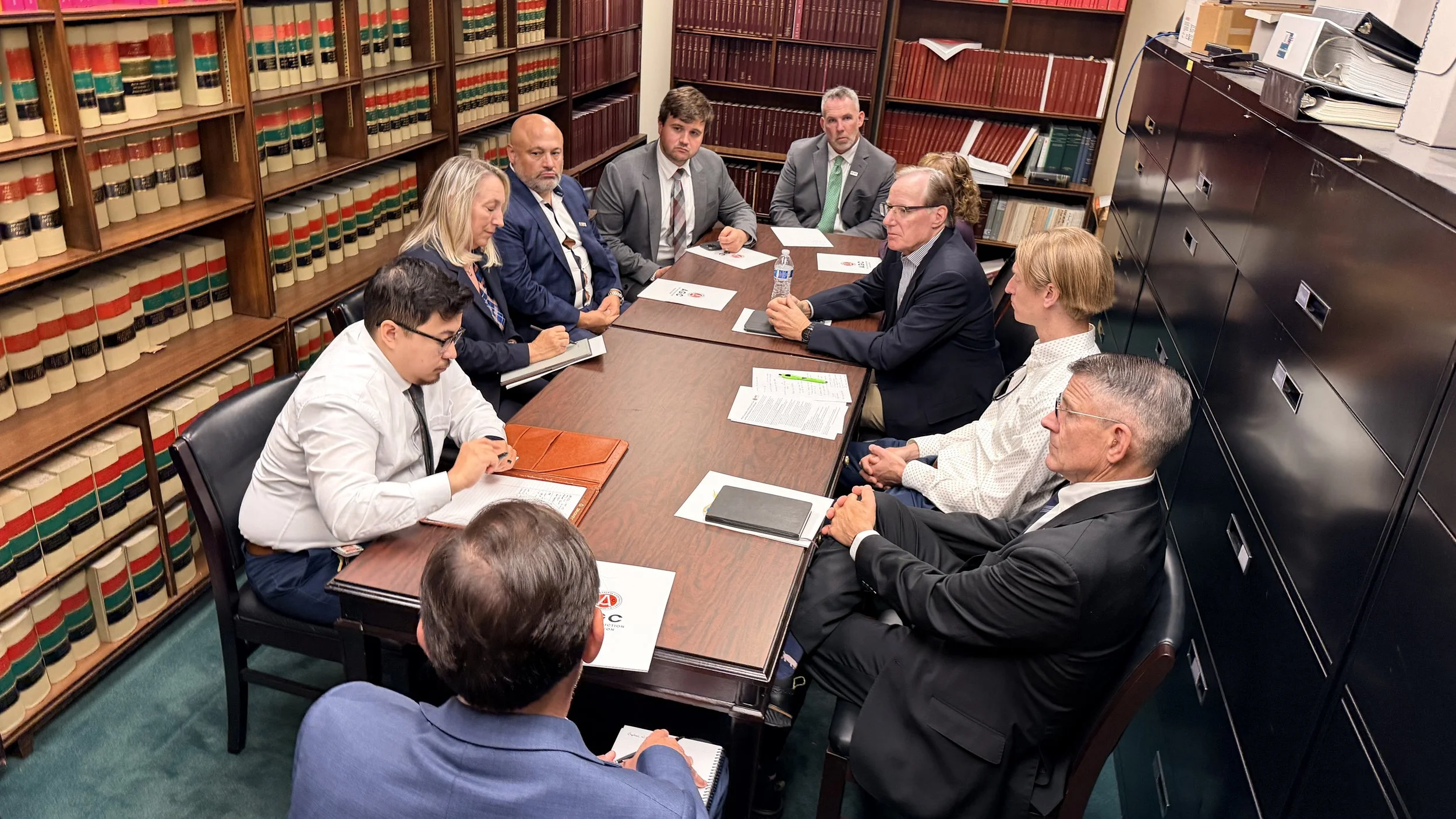
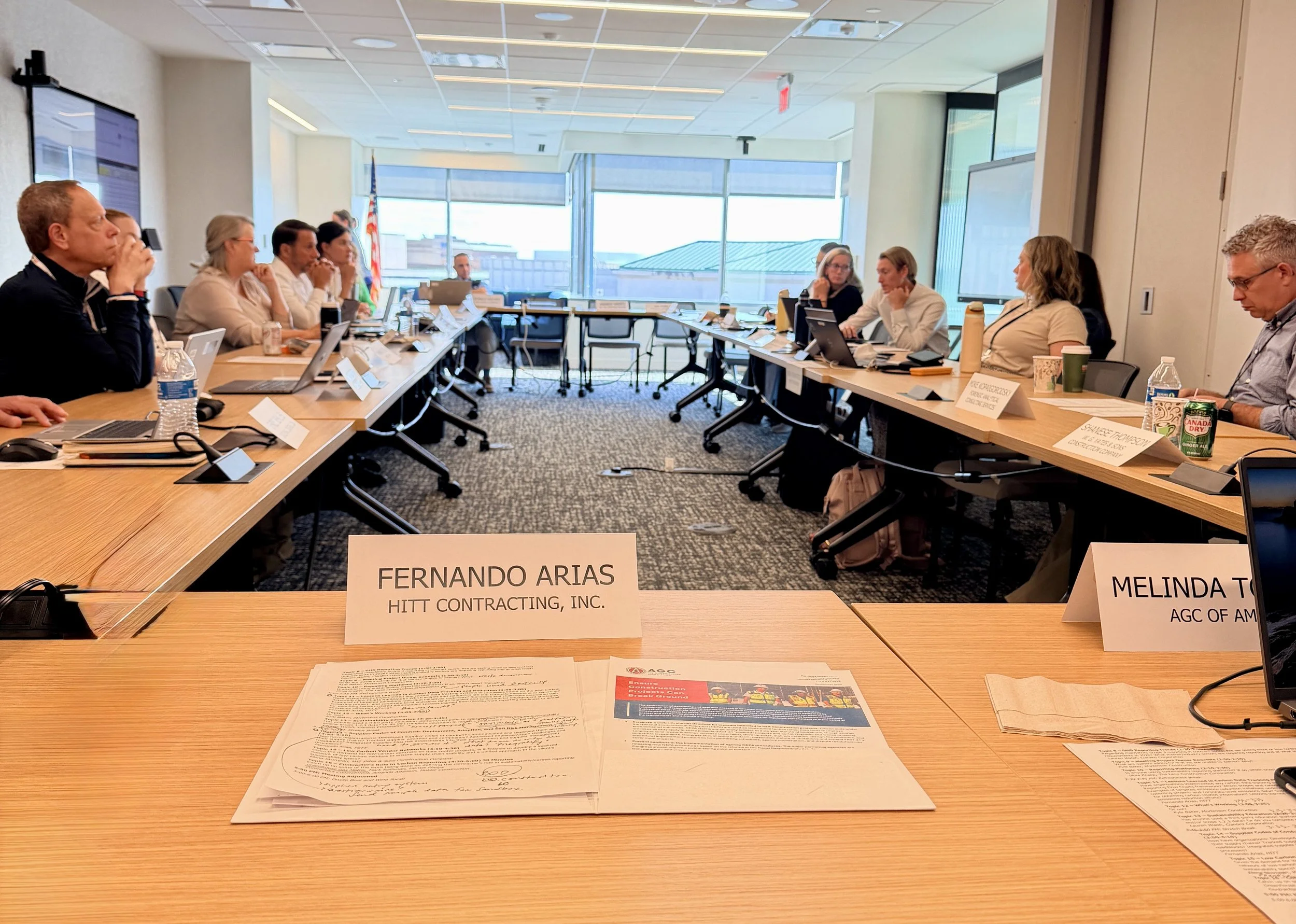
Last week, I joined fellow members of the Associated General Contractors of America Environmental Committee on Capitol Hill for conversations with congressional staff from both sides of the aisle about PFAS, permitting reform, and the practical effects of environmental policy on the construction industry.
AGC’s current and past committee chairs led much of our industry perspective on PFAS. I was proud to contribute an economic and systems lens to the discussion on behalf of HITT Contracting Inc..
On an individual project, the visible impact can be significant. Hauling and disposal costs may rise from approximately $24 per ton for clean material to as much as $400 per ton when material must be handled as contaminated. Across roughly $2.2 trillion in annual construction activity, even relatively modest PFAS-related cost increases can ripple through project budgets, insurance, waste infrastructure, and ultimately public costs.
But the less visible impact may be the larger story.
Waste and recycling systems are already fragmented across regions. Landfills and recycling facilities are managing limited capacity, inconsistent markets for recycled materials, growing municipal waste streams, plastics that do not decompose, and debris from natural disasters. Adding PFAS-related requirements without clear standards or adequate infrastructure creates pressure far beyond a single project.
The construction industry is often a passive receiver of PFAS, not its producer. Still, contractors, owners, insurers, haulers, recycling facilities, communities, and the public can all bear the consequences when responsibility and handling requirements are unclear.
The most durable solutions will require a holistic framework: clear standards, fair allocation of risk, stronger hauling and disposal infrastructure, and greater investment in recycling, diversion, and circular material markets.
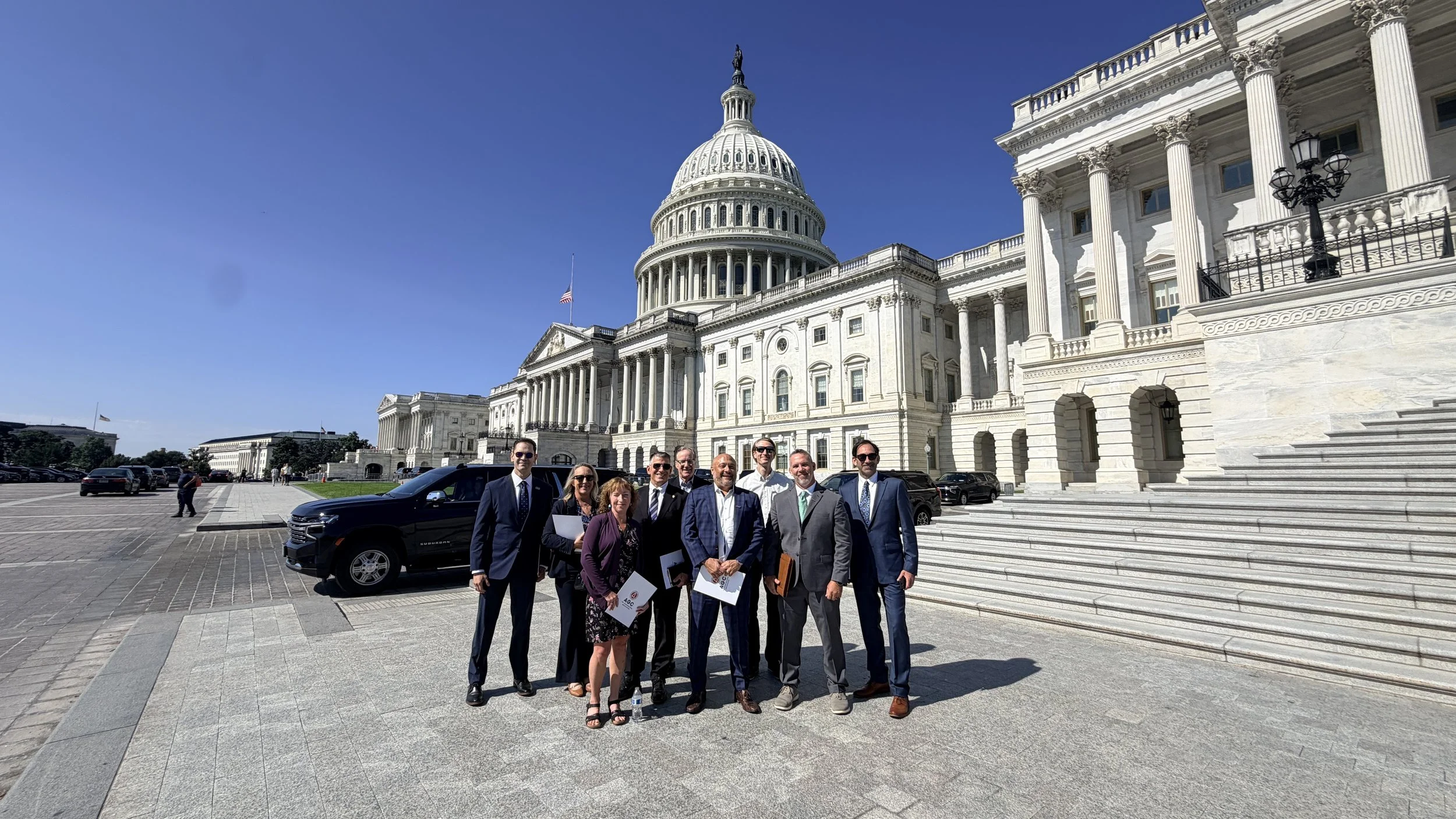
I am proud to represent HITT in conversations that move beyond identifying regulatory burdens and toward practical, win-win solutions that protect human health, support responsible construction, and strengthen the systems our industry depends on.
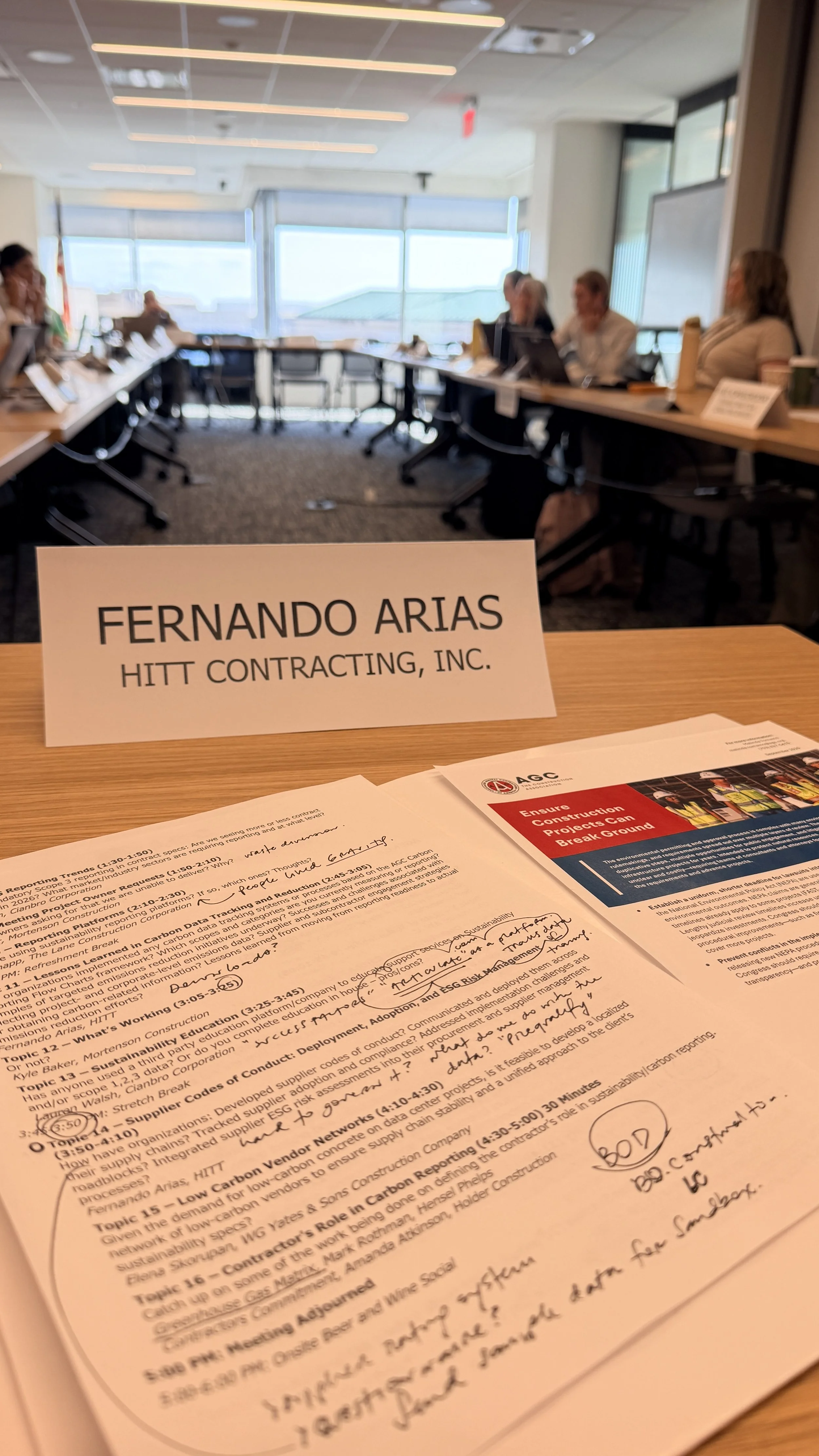
Later that afternoon, I returned to AGC headquarters to moderate the Sustainability Roundtable, continuing the conversation about how our industry can turn environmental goals into scalable action.